Sunday, 22 February 2015

Gearbox 2.

After preparing the parts, I started building the unit.


First the selectors go in.


The selectors are held in position in gear and neutral by theese items, which end in a ball. They need to move free and need to be held tight by their springs in order to make the gearchange feel all right.


The springs sit behind their securing bolts. Theese bolts are sealed with copper rings. In order to make them seal, I heated them before instaling.


You have to pay attention when fixing the selector forks onto their shafts. They have to be in perfect position, unless You will end up with a pudding stearing like gearchange and sooner or later a destroyed selector shaft.


The reverse gear shaft was checked for straightness and wear.


No problem was found, soo I installed the assembly.


Gearbox 1.

Although we did not have the correct original gearbox in the car, luckily we had an Innocenty Cooper Export unit, which is identical internaly as the original, just in a rod change housing. This gave most of the hard-to-find parts for an original setup. We also needed a remote change 4 syncro gearbox case, and some internals. Luckily I had one in my shed, collecting dust a few years now. This is 90%. The rest 10% was a bit of a problem. The Inno had the late pot type inner driveshaft joint, the 4 syncro came from a plain 1000ccm modell, thus had the rubber cross type, unlike the Cooper S, which had the hardy spicer joint. The parts that are available new, we bought, but still there are 3 parts that are not available of the shelf. Theese we got from a mini racer, whom we are very gratefull for this, and as soon as possible we will give them back :-).

Rebuilding the gearbox on a mini is not a one afternoon job, and although it might look easy, need a bit of attention at some points. Especialy if You would like to do it only once.

First I cleaned everithing. This time I took a chance with the dishwasher. Although it was technicaly a success, I am not sure how many times the Wife will forgive it to me.


I have a couple of dismantled gearboxes, I wanted to pick the best parts with as few wear as possible. Take care: 3 syncro and 4 syncro box parts might look similar, but they are not always interchangeable (dont ask me how I learned this).


Nice clean case just out of the paint cabinet. Case inspected for damage on the sealing surfaces, at the bearings and at some places for cracks. 


With some parts the condition is obvios, but some parts need to be investigated quite close.


All the gears inspected outside...


...and inside for wear.


Old sycro rings were definitely worrn. Look at the gap between the ring and the gear here...


...and here with the new item.


As a final point the gearbox mainshaft was checked for straightness.


Sunday, 7 December 2014

Collecting the special parts

As our Wood and Pickett set was quite incomplete, we started to collect some items. With an awfull lot of work and effort, we found a set of seats and an incomplete set of Elf/Hornet waist trim. If anybody has a complete set, we would be rather interested.


Front seats: Aston Martin DB5


If we use the JA Pierce alloys, we will need a set of wheel arches. Theese are WP items.


Color

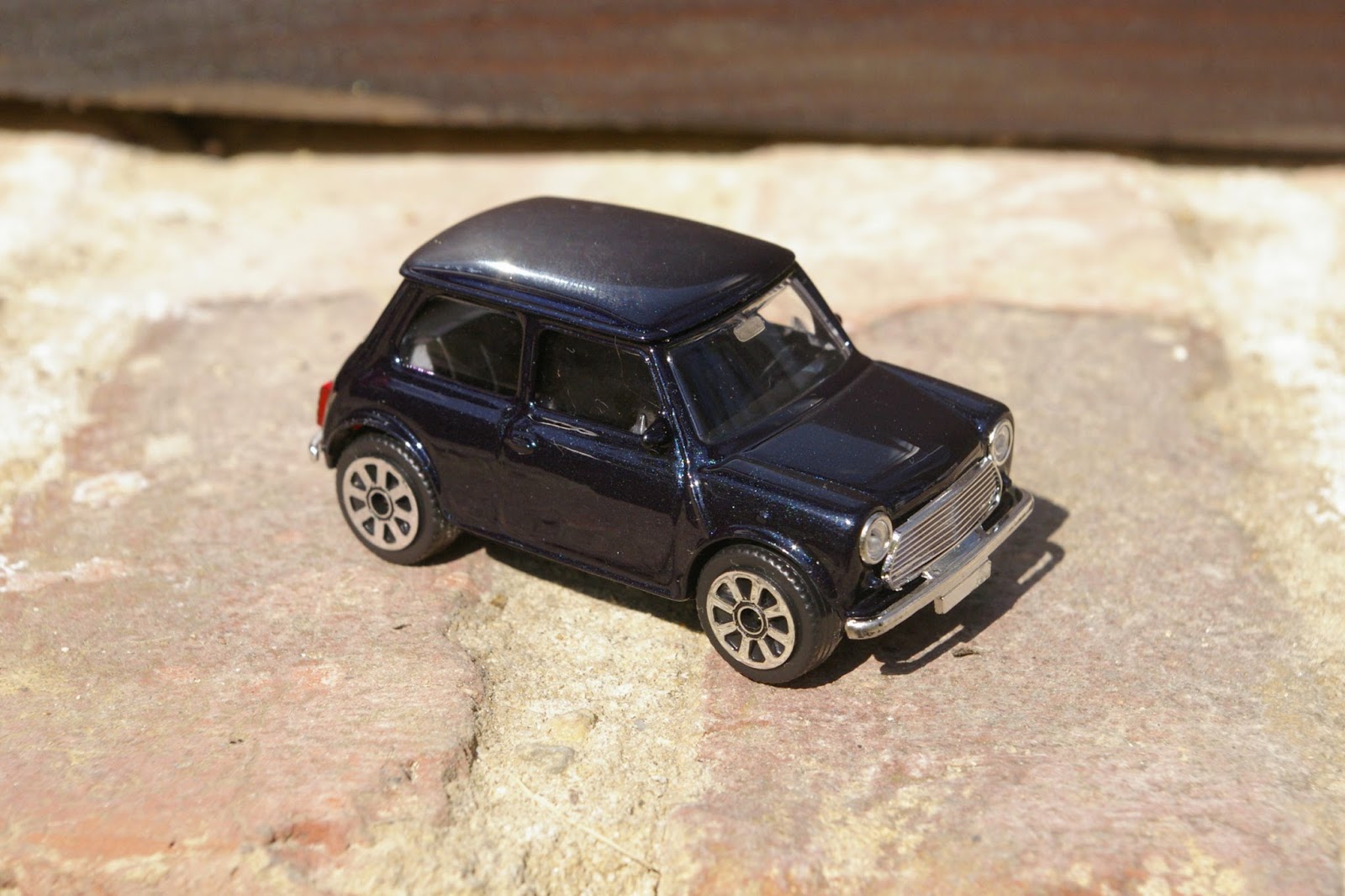
Finding the right color is not an easy task. Wood and Pickett usualy repainted their cars in premium colors of the are, like Rolls Royce or Ason Martin. Visualizing the color from a picture is impossible, soo I usualy paint samples. Best sample is a scale modell of the car for sure. This time extra-extra care and efforts were taken for this operation. We had at least 20 shades mixed and at least half of it painted on sample minis. It was a real fun.


Pacific Blue 


Solent Blue


Sage green


Regency bronze


Regal Red


Midnight Blue


Seychelles Blue


Sierra Blue

Suspension 1

After sand blasting the suspension, we painted them.


The trailing arm bearings were replaced fron and rear.


JA Pierce Magna wheels...


...polished.


Twin SU HS2 rebuild

The carburettors.

As we moved on with the restoration, the carbs came in the view. They looked to be in rather acceptable condition according to their age. Inspite we had an awfull lot of work with them later on.


The first task was to clean and replate the replateable parts. The cleaning we do here in the worksop, soo it went as it should. Unlike the plating. Normaly we have the parts plated at a company specialized in galvanizing. Usualy they do good work. Not now though. The finish was rough and uneven. They definitely used too high current density, and I suspected a contaminated bath also. Later it was proved. I had to remove the plating, which has left a black oxide layer on the parts. A clear indication of some kind of unintended material in the electrolite of the platers. The layer was very passive, not reacting with anything. After a few hours of experimenting, I had to remove it by blasting. I was rather suspicious what the contaminating was, soo I sent one part for x-ray laser analization. My bet was lead, but it was not correct. The analizers found copper, sulphur and phosphate on the surface. Copper dominating. Copper is the material of the hangers in the bath soo I think the workers left the items in the bath for an overnight for some reason, and copper was disolved in the electrolite from the hangers surface. No good. Ayway I redid the plating myself, and now it is correct.


Alloy can distort quite badly after soo many years, thats why I I checked the mating surfaces for flatness. I had to regrind each and every part. if the carbs do not seat properly, they wont seal. Twin SU setups are very prone to false air. Thie slightest air leak and you will never be able to syncronize them.


I checked the damper spring tension. It turned out that the two springs in the two bowls were quite some different. Luckily I have some springs here. I went for a nice maching set of slightly higher tension as originaly.


Just as the springs, the float bowls were also not identical. As I prefer the adjustable version, I picked that as a pair. 


I assembled and checked the float dampers. The piston should travel all its way at a modest speed driven by its own weight. No spring should be put in for the check. I had to polish the inside of the piston wall slightly at points where alloy oxide built up.


The SU carb is schuber-type, which means that the fuel for the engine is matered by a needle that is moving in a a small pipe, the main jet. The main jet should be centered perfectly around the needle. Failing to do this will result in carburettor that wont idle properly, and will eventualy missfire at low revs. The float piston should seat at is own weight, and move completely free.


The float needle valve was replaced with viton-top items.


I set the static float levels. They will be reset once the system is filled with petrol.


The carburetor body itself was in a remarkably good condition. I replaced the butterfly assemblies, but the bores only needed a bit of polishing. They are in perfect round shape.


Setting the butterflies to completely seating position was somewhat a challenge again, as the parts are realy-realy tight.


One bolt in the carb was replaced with a metric item once. I restored the thread and bolted the part with a proper one.


 Nearly done. We still need a set of heat shields, as the originals are in very bad condition. with crack everywhere.


Also we need a valve for the brake vacuum.